One of my biggest fears returning to the States was reverse culture shock. In the past I've found that reverse culture shock is far worse than regular culture shock. Going to new places, I've learned to expect the unexpected and the sheer excitement of traveling usually overcomes any anxiety of immersion in new countries. On the other hand, reverse culture shock destroys the myth of Home Sweet Home. Home is supposed to be the one place in the world that never changes, where childhood memories freely exist, and the comfort of the familiar welcomes all its lost children back. Unfortunately, after living in a strange, far away land, our inner standards of normal shift. Home, on our re-calibrated standard, no longer feels normal. Things are off. With their guards down, travelers often fall victim to the depressive reverse culture shock.
When I first lived abroad for six months in Costa Rica and Nicaragua, I got lost in the abyss of reverse culture shock. For the cost of a single beer in a Boston bar, I could buy 20 beers in Nicaragua, or pay an entire week's wages of local factory workers. Instead of enjoying social nights on the town with friends, leaving my house became disturbing and mentally draining. The frugal me hid from the excesses of the American lifestyle.
This time, familiar with what to expect after two years away, I came back to Boston preparing for the worst. I understood that prices would be high. If I saw my peers paying for an absurdly priced sandwich, I knew that I should probably go along with the crowd and not worry about individual purchases. With this mentality, I overcame reverse culture shock.
But needless to say, this past month, there have been instances that utterly freaked me out. Of all places, nothing was quite as overwhelming as taking a trip to the supermarket. There, all the vegetables are perfectly grown: all gigantic, without any blemishes, colored with deep greens and reds, and all identically created. This food does not feel natural.
While I haven't succumbed to a cultural depression, strange nightmares about giant green peppers or attacks of the killer tomatoes might just be the preferable alternative to never leaving my house.
Returning to the developed world after spending two years in South America, the only time I've been evacuated due to flooding is ironically here in the good old USA. Thank you Hurricane Irene and the overflowing Raritan River.
This is the transcribed, handwritten journal I kept while traveling in Cuba. Throughout my two-week journey, I saw one of the most fascinating places I've ever visited. While most Latin American countries share many similarities, communist Cuba has developed in a very different direction than its neighbors. Although my travels in Cuba were technically for pleasure, as always I concentrated my energies towards cultural exploration while I tried to understand the people, their history, and the government run economy that has driven this country to its current state.
In diary format, I document how my journey unraveled. Prepare yourself for unedited writing saturated in stream of thought. Instead of sifting this down to a few short essays, for better or worse my original scribbled words are left untouched.
Throughout this journal I will expose the mind of someone caught in a tourist world, while trying desperately to avoid the all inclusive, yet secluded, hotels and resorts, electing to stay with Cuban families and befriend local characters. Thus I was neither part of the tourist circuit nor the local mishmash. Stuck somewhere in between, this is how I saw island: a strange, strange place, where beggars earn more than doctors and the capital city looks like a colonial ghost town.
Without further ado, I present my adventures in one of the world’s last communist countries.These are my Cuba Diaries…
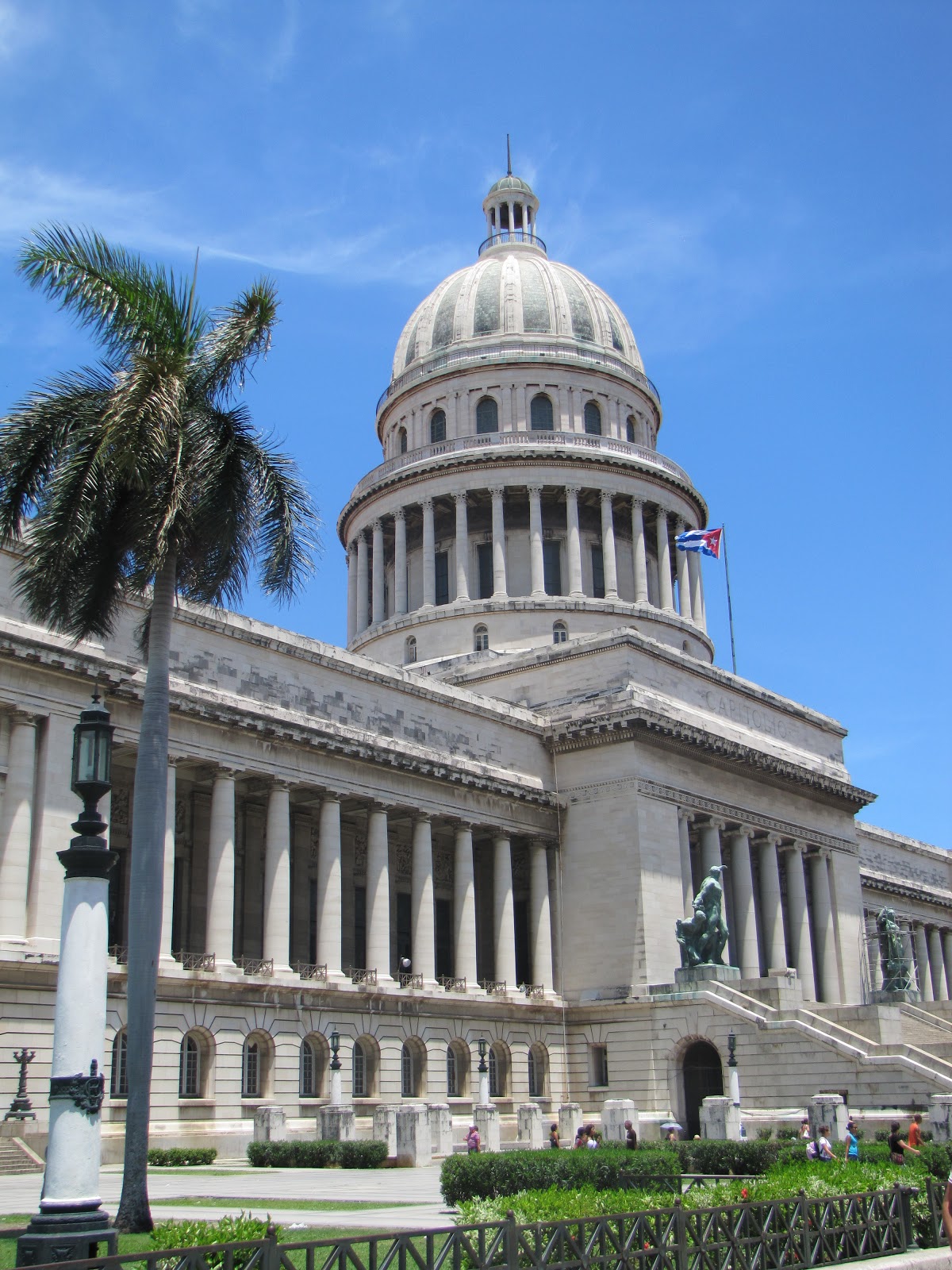
Day 1, Saturday: I walk off the plane down the stairs on wheels directly onto the tarmac at Havana International Airport. The humid tropical air tastes like Miami. The largest, most perfectly defined rainbow I have ever seen in my life stretches its ear to ear grin as a warm welcome to Cuba. Immigration painlessly lets me pass without stamping my passport (because US Department of Homeland Security would hassle me upon my re-entrance to the States) and a cab takes me to my home-stay -- an apartment behind Capitolio, a life-size replica of the US Capital Building. On the ride to the center of Havana, like a dog with his head stuck out the window, I marvel at all the storybook 1950's muscle cars and the hundreds of billboard propaganda still celebrating the feats of The Revolution.
At my home-stay, I know I'm out of Andean South America when my host dad and his father-in-law acknowledge that "You're from Boston, You must be a Red Sox fan!" It turns out future Sox shortstop Jose Iglesias played for a team two hours outside of Havana. Apparently all the talk out of the Cuban baseball world right now revolved around a kid the Yankees just picked up who supposedly throws a 106 MPH fastball. Unfortunately for me, Cuban baseball season only lasts from October to May and I won't be able to catch a game while I'm here.
Before heading out for the night to stretch my legs and see Havana, my host dad informs me that he's an ex-supervisor at the state tobacco factory; he can get cigars real cheap. The most expensive export, which leaves Cuba wholesaled at $250 a box (later marked up by middlemen and cigar shops), my host dad can pick up for $70. He boastfully welcomes me into his home by presenting me an authentic Havana.
Following my usual anti-tourist backpacker mindset, when I left the apartment to go exploring, I found a street party and befriended a local hip-hop artist. He spits me a few freestyles and I end up walking the moonlit Havana streets with him and his friends. Passing around a bottle of Havana Club, we sat outside bars taking turns beat-boxing for Toño's raps.
The big turnoff of the night though was how pushy Cuban girls can be. They insist on cozying up to you for drinks, even if you refuse. They invite themselves along with you without any invitation. Tonight it reached the point where I was so suffocated that I called it an early night and went back to my apartment.
Under the steamy Caribbean night stars, with an eyelevel window opening up to the entire Havana skyline from my tenth floor penthouse, I took a refreshing shower while smoking my host dad's cigar gift from before. This is Cuba.
Day 2, Sunday: Cuba is a strange and fascinating place. After spending the entire day walking around and exploring Havana, I am truly amazed. Havana clearly once has massive amounts of riches passing through it. The colonial center is so extravagantly designed and the architecture so intricate. But the forgotten about upkeep has left sun-bleached paint peeling from the walls and decaying wood shutters falling from their hinges. If it weren't for the bustling black Creole faces shuffling through the streets, I would call Havana a colonial ghost town. The colorful 1950's cars add to the city's mystique. But people's outdated clothing styles just feel stuck in a 70's or 80's style drought. With horrible vintage fashion, it's no wonder that men are so quick to shed their shirts under the Caribbean heat and women to roll their tops to expose their starved stomachs to the coastal breeze.
After tiring of last night's hustlers, for the first time I felt extremely comfortable when I stumbled upon a closed street with pricey tourist shops. In Cuba, there are two currencies: tourist money (convertible pesos) and local money (pesos nacionales). It's this dual economy (as well as the lack of competitive enterprise) that makes tourism in Cuba so expensive. While the convertible peso is worth about a dollar, 24 pesos nacionales are worth one convertible. Most Cubans live on $8-$25 a month. But the tourist restaurants charge the low end of that for a dinner and the hotels charge twice the latter for a night stay.
On this tourist street that I fell in love with, my favorite vendor sold as souvenirs local currency of three peso bills with Che Guevara's face. I started talking to the vender, laughing at how he sold almost worthless currency (the equivalent of 14 US cents) for $8 each! The vendor was immediately impressed to learn that I had only been in Cuba for less than 24 hours but had already finagled my hands on pesos nacionales (in a drug deal-like hunt). The vendor explained to me his flawless business model: his product is completely liquid with no sunk cost investment, plus, he ends the day with compete profit on this arbitrage deal.
Now, as I scribble away in my journal, I am now back at my apartment where they treat me like a king. My host mom is about to cook me a lobster tail feast. I feel like I just discovered the shipwrecked treasure I saw earlier today on display at a Spanish fortress-turned museum. Thank you Yhovanna!
At night I strolled down El Malecón, the main drag that hugs the coast (think Lakeview Drive in Chicago). I met some guys playing dominos and played my first of this favorite Cuban pastime. I kept walking. I stopped by a stand for a bottle of water. A guy inadvertently cut in line. When someone said something, even though the cutter had already paid, he apologetically went to the back of the line, so as to only pick up his six-pack when he properly reached the counter. Another gracious man then bought the cutter an extra beer. Only in Cuba... When I continued and then walked by an ice-cream shop, I found an endless line wrapped around the entire plaza across the street. Whole families patiently waited hours just for a few cones. Is this an effect of the food shortages and rationing I've heard so much about?
To top off the quiet Sunday night, I grabbed a mojito at an ocean-side cafe and talked cigars (known here simply as "tobacco") with the waiter. With fishermen catching foot and a half long bass from the shore in front of me and the monumentally lit Spanish fort to my right, I blew out thick, smooth smoke from between my lips and casually soaked in the surrounding life in Havana.
Pinar del Rio
Day 3, Monday: Yesterday, I didn't understand why the ticket agency couldn't sell next day bus tickets after 3 o'clock. The store was still open and the bus still wasn't full, but arriving at 4, I was late and rules are rules. I ended up buying a ticket for an earlier tourist bus that left at 8 AM this morning. I'm so used to Bolivian companies promising more than they actually offer, and was pleasantly surprised to find that this company included more than advertised.
We stopped at a rum bottling factory in Pinar del Rio. We toured a tobacco drying house where the guy working there offered me a free beauty that he hand rolled in front of my eyes. When we stopped at a rest stop, I wandered down the road to another dry house, where I met a subsistence farmer who gave me a pair of tobacco leaves to play with and take as souvenirs.
On our tour, the guide talked the entire time, but a few facts really stuck out to me. First off, Cuban doctors are the most respected in Latin America, so it was no surprise to learn that with the dictatorial regime before 1959, there were 60 deaths per 1000 live child births. That number has steadily dropped to 4.6. Also, When Castro took power, life expectancy in Cuba was 55 years. It's now 77 years. As for other noteworthy social projects, we drove by a housing development in which prefabricated apartments were first offered for free to the rural factory workers who constructed them before being sent off the city dwellers. This socialist system is amazingly fascinating.
Me with tobacco leaves in hand.
When I finally reached Viñales, the gem of Cuba's famed tobacco growing region, I spent the afternoon watching a local soccer match. Since the field was really a baseball diamond, whenever the ball rolled across the infield dirt, it would unexpectedly jump when it crossed onto grass again. And the talent was extremely entertaining to watch, as everyone showed off their skills by showing off their exaggerated Latin gusto. Staring wide-eyed at the lacrosse style play (first go for the man, then go for the ball), I noted to the guy sitting next to me that this physical game wouldn't end well. Shortly after reaching that conclusion, the inevitable on-field fight broke out. I've seen bench-clearing brawls before, but never before have I seen a stands clearing brawl. Dogs, kids, women, and teenagers with bats all tried to join in to take out some cross-town rivalry aggression. Instead of trying to diffuse the situation, the officials just left.
At night I sat on my new host family's front porch in a Southern-style rocking chair. I capped off the night with a mojito and today's hand rolled cigar. All night I tried to analyze comments from my new host dad. I still have trouble grasping how he can have a TV, an iPod for his daughter, and a computer with internet, yet he still complains all the time about not having ANYTHING. He's clearly yearning for a capitalist system, but compared to everyone else in Cuba with $25 monthly salaries, help from his brother in Miami doesn't hurt. I'm starting to realize that everyone here who has money always talks about how little they have and those without money are always asking for it.
Grandpa Rene rolling his savory cigars.
Day 4, Tuesday: Today I went horseback riding through tobacco country. Under the hot, but not humid, sun, I silently let me horse walk slowly down his relaxing route for five hours. The ride ended at my host mom's dad's house. Grandpa Rene poured some amazing mojitos (2 tbs sugar, 2 tbs lemon juice, mint leaves, 1 shot white rum, mix, add half a glass of H2O and a squirt of honey (the family secret ingredient), mix again, then top off with ice). I watched in fascination as Grandpa Rene rolled his own cigars. These smoked so smooth and tasted so sweet. Before drying, Grandpa dips his tobacco leaves in a concocted mix of lemon, honey, vanilla, and rum to create the best Cuban cigars I've smoked yet. All afternoon I spent hanging out on Grandpa's porch, smoking Cubans, drinking home grown coffee, and listening to sexually frustrated rancher friends tell some explicitly dirty jokes.
When I got back to my house, my host dad was watching a TV. He was tuned into a channel named TV Rebelde (Rebel TV), one of the four state controlled stations. I asked myself, How can they still have new documentaries about the Revolution? From what I've heard through the grapevine, the first four to ten years of Castro's speeches were new and insightful. Now, everyone's heard the same stories enough times and the once revolutionary ideas are already old news.
Sitting around the TV, my host brother explained to me how he got his new house. The first step is easy, applying for land that the government allots. Then, to build a house, you can't just hire contractors, you must buy every single bag of cement and build your own house yourself and with family and friends. The host dad chimed into the conversation. To him, this is a huge burden, saving for one to two years to buy enough cement for the entire house. Cement is too expensive.
The host dad continued his anti-communism tirade. "Life in Bolivia is surely better than it is here." I told Dad that even though minimum wage was $100 per month in Bolivia, four times hire than in Cuba, less was provided by the state. I understand that monthly rice rations aren't nearly enough, but 22 cents of a national peso (less than one US penny) per pound of rice is still better than $1 per pound in Bolivia on a $100 a month salary. People in Bolivia watch sports games from the streets outside bars and electronics stores. Here, people at least have TVs and cars and houses. Young people, like my host brother, don't live at home with their grandparents, like they do in ALL other Latin American countries. Is packing eight people into a one room, dirt floored, mud brick adobe house really living the dream? My host dad, having a brother in Miami, has had a taste of the other side and clearly wants more. But of all those who complain about hardships (and everyone I've met here does), this man, able to give his daughter an iPod Touch, is too privileged and makes too many outrageous claims to take as seriously as other, struggling people I've talked to.
Day 5, Wednesday: This morning was extremely frustrating.Trying to be a backpacker in Cuba’s centrally planet tourist industry is not just difficult, it’s nearly impossible.Buried only 10 km outside of Viñales rests one of the largest cave systems in the Americas.Since tourist buses and taxis were overpriced (and way out of my budget) for the hour-long tour of the biggest cavern, I tried to hitch my way over to the caves.First, there are a few things you must know about travel in Cuba.Bus seats are cheap, but scarce for normal Cubans.It’s also illegal for anyone other than air-conditioned tourist buses or certified tourist taxis to drive foreigners.Therefore tourist prices are absurdly high.In response to the collapse of the Soviet Union and the end of Russian subsidized oil, Castro responded by establishing state run hitching stations known as “amarillos” on the edges of major roads out of every town.An elderly lady in a yellow uniform passes out hand scribbled numbers to establish a line.Whenever a car passes and wants to stop for a nominally small fare, he can pick up the next guy in line.After an hour and a half of waiting at the Amarillo, with #23 stuffed in my pocket, I decided that based on the slow progress of only moving from #3 to #4, I would not get to the caves today.Cursing this damn country’s dual economy, I set out to hike to the smaller alternative cavern a short walk away on the other side of town.After a 15-minute rushed walk though the natural hole cut into the limestone mountain, equipped with an underground river and waterfall, my morning of caving passed its climax too hurriedly.In my sour mood, I started the walk back home under the blistering sun.No sooner than I had reached the main roadway in front of the cave’s entrance, a sympathetic driver pulled up beside me, “Do you want a ride?”
At night one of my host sisters explained how marriage works on the island.Nobody has sufficient money for wedding celebrations and although everyone has God in their lives, nobody is religious (Castro kick out the church when he came to power).Therefore, instead of having official ceremonies and parties, couples just start living together.When they eventually have kids, the couple is considered to then be a family.There’s no defining moment when people become married.It just happens over time.My host sister has been living with her boyfriend for two years and they’re not married, but her brother and his girlfriend have shared a house for five years and they’re married.
Me with Grandma and Grandpa
Day 6, Thursday: It’s my last day in Viñales, my last day in the Latin American countryside, el campo.This definitely sent my mind dreaming about Bolivian Samaipata last night.Since arriving to Viñales, I’ve been meaning to go back and hang out with my host mom’s dad, Grandpa Rene, ever since I promised him I’d be back after spending time with him and his buddies on his front porch after horseback riding.I borrowed the family bicycle and headed to the farm.Grandma welcomed me back with an excited hug and insisted on brewing me a coffee (they grow their own).She introduced me to her mother (my host great-grandma) who is 99 years old.She’ll complete her first century of life in five month.That’s Cuban doctors for you.
Grandpa Rene came out of the field to welcome me back.His short break evolved into four hours of cigar smoking and talk about The Cuban Revolution, Fidel, and Che.Rene’s most potent comments were his analysis of the younger generations’ frustrations with the socialist system:
People in the countryside don’t face the same hardships as those in the cities and town centers.You see, with a small plot of land, a campesino, a small-scale farmer, grows his own fruits, vegetables, beans, coffee, pigs, ducks, and chickens.Yes, he must also grow a cash crop for the state (usually tobacco or sugarcane) and donate the mandatory 90%, but he keeps 10% for his own personal use (Rene rolls his own cigars).With a sustainable piece of land and basic needs already covered (or easily bartered for, ie, these tomatoes for that chicken), government rations are extras and monthly stipends are disposable income spending cash.With a rural population (as mainly existed during the revolution), communism works.Urbanites, on the other hand, (at least those who don’t have families working small plots) rely solely on their $15-$25 a month in “welfare checks” for both spending cash and for basics like food.It’s not enough.That’s why street beggars in tourist areas make more than doctors and hotel waiters working for foreigners’ tips are some of the wealthiest Cubans.
At night, after taking the damn tourist bus back to Havana then arguing with a cab driver (no, it’s not his God given right to drive me if he treats me like cattle and they guy behind him in line offers a better fare), I welcomed myself back to the hustling and bustling capital.While stretching my legs, I befriended a group of men playing dominoes.The invited me to sit down and offered me a Cohiba (a factory brand cigar after dabbling all week with artisan rolled ones).I played for hours and had some early success, although, I have very little idea of how strategy works in Cuba’s, informal titled, national game.I think I might stop by here again tomorrow to play some more.
Day 7, Friday: I’ve been here a week!Today was “Wandering Day.”From the Center, I walked to Vedado, the supposedly posh section of Havana.In reality, it was just more of the same, but with crumbling 1970’s style high-rises instead of colonial charm.I entered a tourist market.I think I might buy some art if it weren’t for the $30 export certificate I’ll need (more than doubling the price of any painting I buy).I marched into the Hotel Nacional, a relic of better days, but still one of the most expensive hotels in Havana.Trying to blend in, I was embarrassed to ask the price of one night stay (I’ll bet it’s upwards of $200 a night).I did book a reservation for Saturday night’s Buena Vista Social Club concert.
Havana Vieja (The Old Quarters)
I crossed back across the center of the city to Havana Vieja (The Old Quarters).Ironically, the Old Quarters are the most modern section of the city.The old churches, colonial plazas, and picturesque alleys are newly painted and restored.There are a lot more older, white, European tourists here as well as $20 a plate restaurants and a plethora of museums catering to all interests.I stopped into one that has a 1:5000 size replica of the city.The heart of Cuba is more massive than it feels walking from end to end.
Plaza de la Catedral
After a siesta break from the exhausting heat, I found myself back on the edge of Havana Vieja.Here I found the Plaza de la Catedral.It’s small and maintains its salt stained stone façade.I sat at a table in the bull’s-eye of the plaza, where a fountain would be in any cobblestoned square larger than this.I sipped on my refreshing mojito, which tried to overcome its steep price by sacrificing taste to become overly strong.A conjunto plays hypnotic salsa that echoes off the enclosed walls of the surrounding buildings.This quiet spot has officially become my favorite plaza and place to escape in Havana: Plaza de la Catedral.
When I got back to the apartment, I walked into heaven.My host dad was watching the national baseball team play Venezuela on TV.We spent the late afternoon/early night watching this beautiful sport and talking about the game.I couldn’t have been any more at peace.
Even watching baseball is very telling of national culture.The strutting Cubans played in a Venezuelan tournament.It was only too telling when the telecast experienced an hour delay with mid-game blackouts, the stadium lights went dark, accurately representing Venezuela’s energy shortages.
The home cooked meal tonight was another feast.I then topped off the night with my old domino-playing buddies.I’m starting to get good.Maybe I’ll have to bring this pastime back to the US.I was proud when a new friend passed by.“Are you guys playing with this Yuma (a derogatory term for Americans, like Gringo)?”“No, he’s cool.He lives in Bolivia and is actually real good at dominos.”
Day 8, Saturday: I finally visited the National Revolution Museum.While the ex-presidential palace was filled with photos and trinkets from militia soldiers who fought Bautista, I was just reminded how important Che Guevara is in Cuba.Here, Che is a national hero and not just a t-shirt design like at home.He’s the Abraham Lincoln of Cuba.I kept imagining the rest of the world having an obsession with the symbol of the dead president in a top hat and the slogan, “Honest Abe.”That’s how we treat Che.
As part of my Saturday night on the town, my night to splurge, I finally took one of the classic American Chevy/Plymouth/Ford taxis.Before, I always assumed that these iconic Cuban vehicles would be the expensive tourist taxis.Apparently, these are the cheap ones.I can’t understand why.Tourist taxis are just stripped down 1980’s and 90’s Soviet cars.I would much prefer to pay up and ride the classic hotrods as opposed to unanimated generics.1950’s cars represent the charm of Cuba.I’m surprised it’s not the tourist choice.
As I rode with my head out the window of the taxi down the ocean-view drive, we stopped by the Hotel Nacional to see Buena Vista Social Club.Since I arrive a bit early, I walked down to El Malecón to absorb the good vibes of street parties on the coast.Much like in Cali, Colombia, there was a drummer, slapping away on a cardboard carton with a group of 100+ accumulated passerbyers singing and dancing to popular Latin radio songs.That is the true joy that local Cubans love to live.
Back at the Hotel Nacional, as a Cha Cha Cha band took the stage, I learned something about Buena Vista Social Club.It’s actually a music association, not just a band (which the rest of the world recognizes by the original founders of the association).The only original was the old bongo player who led his orchestra.Even though it wasn’t what I expected to see, it was still a fun novelty to see an over-rehearsed show at a five star hotel.
After leaving the show and still craving more street music, I tried to find some more locals having fun on El Malecón.It’s sick and sad how I cannot just meet Cubans.Everyone in Havana just clings like leeches and treat me like moneybags.There are no “pleases,” no “thank yous,” just guilt trips and nagging.Jinatero is the Cuban term to describe these people that literally means prostitute.In reality, jinatero encompasses both male and female, leeching gold diggers.I can’t escape it.In all my travels, I’ve never before felt that I couldn’t wipe off the dollar sign from my forehead.
Day 8, Saturday: After a week I’m finally getting the hang of taking some local transport.I took a shared muscle car taxi to Guanabo, one of the Playas de Este beaches.Lonely Planet describes Guanabo: “For those who dislike modern tourist development or are keen to see how the Cubans get out and enjoy themselves at weekends, Plays del Este is a breath of fresh air.”And yes, the beaches were overflowing with thousands and thousands of dark skinned Cubans.Walking up and down the 9 km of beach, the remains of hurricane induced concrete ruins felt like a post-apocalyptic movie set.There torn down concrete buildings were more plentiful on the edges of the sand than palm trees.
At the end of a day of beaching it up, I’m as red as a delicious Cuban lobster.I’m also appalled at how the locals leave so much trash in the sand.It looked like a hurricane disaster with so much left behind.I know developing countries love to boast how “green” they are.This just isn’t true.Developing countries only have a lot of trees because these areas haven’t yet been industrialized.They don’t burn a lot of oil and release greenhouse gasses simply because the people can’t afford to travel or produce as much.None of this is because citizens treat their lands with better care.Mostly, people don’t think about the environment at all (with the exception of rural farmers).Not just in Cuba, all over Latin America people litter and turn beautiful places ugly with a lack of concern for public space and one’s own surroundings.
With night came the tide, which cleaned the beach and washed away all the empty cans, glass bottles, plastic bags, chicken bones, and nut shells (or at least made them someone else’s problem).When the sun goes down, all the weekend trippers leave.Finally alone in the sand, I lit my cigar and enjoyed the calm, salty breeze.The cool winds even blew a few shoot stars across the sky.
Day 10, Monday: Burnt! Burnt! Burnt!Instead of the lone white guy amongst a sea of black bodies, I’m now the lonely red guy.It’s bad enough that I had to leave the beach early at two in the afternoon to head back to Havana.
With all the wacky things about Cuba, one of the strangest is that they are clearly in the wrong time zone.The sun is strongest and directly overhead at 2:30 PM and the sun doesn’t set until 8:30 at night.
Back in the capital, I hopped around a bunch of art galleries.I found the remains of “The Wall” that surrounded Old Havana and was closed every night to keep the pirates out.For the late Cuban sunset, I strolled down the always-crowded Malecón waterside street and soaked in the cool ocean air.I did some reflecting.
"...one of the noblest ways to serve one's country is dedication to work."
In Cuba, I’m amazed at how suppressed the informal economy is.There is nobody peddling anything without having a government-registered name card.Street vendors, all registered.Peso pizza shops operating through apartment windows, all registered.Even the few small restaurants that are limited to 12 patrons, all registered.The Castros have really stamped out even the smallest of the informal sector.
One of the main raids in the central district is El Prado.In its glory days, it must have been the wealthiest street to place a mansion.Now, the lanes of traffic are divided by a basic promenade leading the spine of the street toward the beach intersection at El Malecón.The slum-like state of the decaying architecture and shadeless walk under the strong sun leave this prominent pass largely vacant.The entire afternoon and night I spent dreaming up revitalization projects…maybe a future school case study…
A Cuban Missile
Day 11, Tuesday: It’s July 26th, National Rebellion Day!This day marks the anniversary of Castro’s failed attempt to storm Bautista’s Moncada army barracks in 1953.When put on trail, Castro gave his famous History Will Absolve Me speech (transcribed into an immortal manuscript).From then on, and this to this day almost 60 years later, Castro’s revolutionary movement has been known as M26 (Movimiento 26).Back in his prime, El Comandante would bless the nation with public speeches that would last five hours.I’ve been told, “These were captivating for the first ten years, but now, we all know the history behind the revolution.”Instead, Raul Castro gave a short televised speech in a far away province.It’s astonishing that no new blood is part of Fidel’s government.Every important post is run by 80 year old men!
To celebrate, most Cubans just stay home and relax.In better days, those in the countryside, like Viñales, would have pig roast festivals.At the Moncada barracks in Santiago (the other side of the island), they host a reenactment, which I watched on TV with my host family.I then went to see if anything was happening at the Plaza de la Revolucion (which is still referred to by its pre-Castro name, the Civic Center), where all the government offices are located and is marked by the Jose Marti Monument, the tallest structure in Havana.The place was empty and I couldn’t even take the elevator to the eagle’s next lookout at the monument because off government businesses (ie the entire island) is closed today.
On my defeated walk home, I found an art exposition at the old port/central train station.For a country where speech is repressed and the government own the only newspapers and all four TV stations, artists take surprising liberties pushing these boundaries.Photos of propaganda slogans behind dumpster divers and paintings of Cuban flags wearing conquistador outfits enslaving poor Cubans really make unsubtle statements.Thanks to Castro’s love of poetry, he has successfully promoted Cuba’s literary and visual arts in an otherwise repressive regime.
Watching the nightly baseball game, I saw one of the rarest set of plays.I witnessed most likely the only 5 out inning I’ll ever see in my life.With out number three resulting in a passed ball strikeout and a subsequent stealing on first base, the pitcher laughed at his wasted K.When the next batter reached base on the exact same strikeout play, the pitcher just shook his head.With the fifth out of the inning coming on a fly to center, the entire team surrounded the pitcher to congratulate his four strikeouts (and one pop out) in the inning.
Day 12, Wednesday: Back in the days of Spanish gold and looting pirates, Havana built fortresses and a meter and half think wall to enclose and protect their jeweled city.Every night at nine o’clock, right after the sun goes down, the city closes its gates and seals out the bad omens for the night.To this day at the same time, the ritualistic cannon shot that shakes across the Old Quarters sounds off.On my last night in Havana, I watched the sun set over the Caribbean waters from my perch by retired cannons at the most prominent Spanish fort (where Bautista and then Che executed prisoners).At 8:40 the cañonazo ceremony began, and at nine o’clock on the dot, the lone cannon shot exploded.
When the show ended, I hailed an over crowded bus to go back to town to pack my bags for the last time.While the radio quietly sang tunes, the entire bus bellowed along like a choir in unison.It was a perfect goodbye to Cuba, watching shirtless men packed in like cattle, standing and singing; listening to old women, seated with two children on her lap, singing to her boys; just hearing the group working together to pass the time.As uncomfortable as the bus ride may have been, the Cubans transformed it into a liberating place to let loose.This is Cuba…
Medellín is probably the most beautiful city I have ever seen in my life. The open streets filled with shade covering green trees, cool the City of Eternal Spring. Open faced restaurants, bars, and cafes invite suburb-like comfort in the middle of an urban area. It's hard to imagine that ten years ago this was the capital of the Colombian drug wars. Although hostels repeatedly warn not to have a false sense of security, the brand new metro, the clean sidewalks, and green trees mixed with stylish buildings easily demonstrate the feats overcome by a new Medellín.
However, I did take a Pablo Escobar Tour that visited his grave site and the site where the world once most wanted man was shot, while hearing a brief history of the rise and fall of the most infamous Colombian. The tour culminated with a final stop at an old safe-house for the Don. We saw a couple of his run-down incognito cars (the government seized the fancy ones) that were re-outfitted to drop blinding smoke from below the trunk for easy getaways. We saw a desk that had a secret compartment to store over $4 million cash and a secret closet where Escobar hid, not from the government, but from the electric company. And we saw recent bullet holes in a painting and through a window, from when rebels attempted to kidnap and hold Escobar's brother for ransom.
The highlight of the safe-house was the guided tour by Escobar's brother, Roberto, the financial head of the Medellín Cartel's operations in the 70's, 80's, and 90's. Clearly cash-strapped himself (thus offering tours of his house/museum), Roberto told fascinating stories of an escape from prison. Pablo Escobar had agreed to go to jail only if he could build his own prison "for fear of assassinations." Escbar constructed a mansion atop a jungle filled hill, much like that of the safe-house we walked through. We also heard stories of assassinations and of the "truly modest" lifestyle of the Escobars (which modestly included private jets, Ferrari and motorcycle collections, and personal zoos). As we left and paid for the tour, it felt real strange giving money directly to the Escobar family.
After taking a tour given by a prominant figure from Medellín's yesterday, we encountered the optimistic progress of the city's amazing transformation. Medellín's famed cable cars connect one of the poorest neighborhoods to the rest of the city. Climbing the mountain in these ski lift gondolas, we watched the favelas pass by below: slums of run-down brick buildings with clothes hanging to dry on flat and tin roofs. By the time we reached the Santo Domingo Savio Library stop (the cable car has stops like the train line it's connected to), colorful murals lined the city streets. Instead of amateur gang inspired graffiti, public service messages encouraged youth to not rob others. If people from the center of Medellín are afraid to come to the poorer barrios, these messages explained, they will cut off those barrios' connection to the commercial centers of the city.
A winning platform for the his reelection, the mayor used a Spanish grant to build a new library in the poorest barrio of the city. Business leaders, still hurting from lingering violence, saw improving the incomes of those most vulnerable to thuggery as the only solution to expanding the economy of Medellín (after all other resolutions had been exhausted). Going against the everlong worldwide trend to isolate the poor, Medellín's progressive library led to the construction of cable cars that run along the main metro. It now hosts classes for kids, workshops for adults, a community museum with a photo exhibit "from the barrio for the barrio."
Our group of Gringo tourists clearly felt put out of place by the curious eyes that followed us around this poor barrio, signalling the pride the barrio takes in having created its own commercial center; it does not revolve around tourism. The barrio started to experience growth simply by increasing its connectivity. When I poked my head into a small apartment where a family was watching the Colombia vs Bolivia fútbol game, they invited me in to sit down on the couch and have lunch with them. When I later sat at a street-side bar to catch the second half of the game in front of a large big-screen, I did not feel like I was in the center of a favela. The surrounding streets offered an air of hope in one of the poorest barrios in Medellín. If only the rest of the world could begin to adopt creatively progressive measures (like a cheap gondola instead of a pricey metro), cities could incorporate people of all classes to combat yesterday's urban problems.
I made it to Medellín and just signed up for a tour tomorrow to visit Pablo Escobar's old hacienda-mansion. Even though my first post about Colombia was about political violence, life here has felt completely nonthreatening. In Cali, my first stop after the crossing the Ecuadorian border, it strangely felt safer walking the streets at night than strolling down the seedy city during the day. Street salsa parties marched through the cool night air, touring the streets to drums beats and rapping and singing Caleños. One night a local artist hosted a fiesta on his roof, where everyone danced to three-step salsa in front of picturesque views overlooking the mountains and the city. The people in Cali, in general, are the most genuine people I have ever met in my life -- and I've met some real welcoming pueblos along my journeys. The sincerity that everyone has when they gladly strike-up conversation is unmatched and gives Colombia the building blocks of its new reputation as one of the warmest nations.
Between Cali and Medellín I stopped in the coffee growing region, La Zona Cafetera, in the Valle of Cocora. The small rancher pueblo was the perfect place to relax, hike, visit a family-run coffee farm, and make funny faced at the roaming cows and horses.
While living the good life in Salento, I realized that the hostel scene has changed drastically since I hopped off the circuit two years ago. Back when I started traveling, maybe one, or two people tops, in an entire hostel would have a laptop with them. These always invited questions about worrying what happens if their computers got stolen. Now adays, in every single hostel I visit, I'm the odd man out because I don't have an iPad or a small Acer. Hostels are all hooked up to WiFi. I'm surprised at how nobody seems to worry about their expensive electronics and at the same time saddened at how people now hide away in their hostels, more connected to their electronic lifes at homes and cut off from the incredible places they visit.
I've finally reached Medellín, one of my most anticipated stops in all of South America. Known as the "City of Eternal Spring" with its year round warm weather, the city feels like a Western metropolis. Open-aired cafes surround streets and tree covered plazas. Even the busy center feels like a well-developed and happening business district (as opposed to the dreary cement faces that tower over the streets in Cali). The trains are more modern than the Green Line in Boston.
After spending all morning wandering the streets, trying to get a feel for and understand this infamous city, I signed up for a Pablo Escobar tour tomorrow and plan to also check out the largest aquarium on the continent. I'm loving Colombia!
I finally crossed the Colombian border. After biking through the mountains of Baños, Ecuador, crossing rivers in cable-cars that flew down ziplines, getting drenched in waterfalls with caves that lead behind the splashing falls, and relaxing in hot thermal baths, Cali is a startling change to nature and an interesting first impression of the infamous country.
Cali is the salsa dancing capital of South America, known for its nightlife and provocatively dancing women. But on the outside, the city is a dreary cement landscape. The buildings are tall, solid faces of grey cement that allow for surprisingly few windows. As someone who has a high tolerance (or recklessness) for entering zones known for urban danger, I've been nerved by the fact that streets empty the second the sun starts to set, leaving an eerie warning to travelers to stay indoors. At the famed salsa bars, large signs loom outside stating that women are not permitted entrance without an accompanying male, which I'm not sure if that's in response to the frequent problems of taxi drivers preying on defenseless single women or if it's to force out the high amounts of prostitutes. And night clubs in the city legally must close before one am, a strict curfew even tighter than in Boston. It doesn't help that newspapers are filled with news about a police commissioner outside of Medellin who was just assassinated two days ago by the still present FARC rebels or the two police witnesses who were shot today by anti-governmental paramilitaries.
Once inside these salsa palaces, the repressed life from outside becomes forgotten and excitement comes alive. Scantily dressed women move their hips to the fast rhythms that neatly dressed men set with their feet. The mixed smell of sweat and rum and frenzied fervor vibrate throughout the small bars. Between every song, partners change, then new pairs organize madness and romp across the dance floor. Cool men and sexy women team up with calm faces as their bodies cut elegantly through seas of novices who bob to the same rhythmic waves that rock the wooden floors to the smooth Spanish music.
Although Cali has very little to offer tourists during daylight hours, the hostel sponsored salsa and yoga classes have been great introductions to Colombia's free spirited night life and to a nation emerging from its lingering violent past.
I've been thinking about upward mobility and the lack there of in many Latin American countries. In many places, even accomplished professionals can't climb the "corporate ladder." For every qualified professional, there is always another equally qualified professional willing to work for less. It's a race to the bottom of downward wage competition. For example, a recent graduate right out of college might earn $400 a month. A veteran engineer, lawyer, or architect will still earn that same subsistence salary after twenty years in the field. Even making all the right career decisions and receiving the education to advance in an industry doesn't provide opportunity to move up economically (which of course includes an inability to save and invest in one's future).
As I think aloud and write stream of thought, I wonder how artificially attacking over population and over saturation of job markets could help alleviate the inaccessibility of wealth movement. By this I mean taking measures like limiting the amount of college degrees awarded in certain fields. With less competition in job markets, becoming a professional would actually allow for wealth accumulation.
Yes, those already in the upper class would probably benefit most from this system and unskilled workers would overflow to unemployment. I'm not saying limiting degrees is the right solution, I'm only suggesting that there has to be a way to differentiate workers in ways that favor certain experiences so as to allow populations to accumulate wealth.
The status-quo race to the bottom isn't working and the accepted common sense solution of simply increasing education is not a cure-all response. Only in selecting and attacking the specific causes of this failed system can nations better utilize their human capital to create opportunities as opposed to sustaining a runaway train of outbidding in job markets.
It's strange how I now judge cities by how long I could live in them. In Cusco we were estimating that it would be a perfect place to stay for about three months. In Máncora, the quiet tourist beach side hangout, a three day stay was enough. Now, Cuenca, Ecuador just got a long-term livability rating. I could definitely see myself staying here. It's the first young, middle class city I've seen in a long time. Relaxing cafes on the corners, international restaurants (not chains but unique dives with exotic foods), all types of museums and contemporary art galleries give life to the cobble stone streets. (I've also seen signs in the city for urbanization/planning/design firms). The Corpus Cristi celebrations happening all week include entire families and not just a rowdy Carnival crew -- they shoot of fireworks all night for the festival, have a million street vendors pushing typical pastries, and launch Chinese lanterns off into the night sky. As a lively and livable young, middle class city, Cuenca earns itself a "settle down" rating on the new system.
Photos don't capture the true eerieness.
And, although it doesn't contribute to the livability rating and just earns a tourist rating, the Ethnographic museum has a collection of shrunken heads that Amazonian tribes used to make of their defeated enemies. It's really eerie seeing miniature faces still with mustaches, eyebrows, and lifelike facial features. Killing is not protected in Amazonian religions. Therefore during wars, by beheading, ritually shrinking, and carrying the doll-sized/fist-sized head with them, the victor would absorb the powers of the dead, keeping the fallen from passing in vein, thus adhering to religious law.
I spoke with a poor middle aged woman in Lima who explained to me her nostalgia for dictators. Please note, this was not someone from any sort of aristocratic class:
Ollanta Humala, President Elect Peru
Back then there wasn't violence in the streets like there is today. Today, Peru's full of unemployment and gangs. We need an authoritative presence again in this country.
Dictators get results. They always had work projects back then. Street violence was squashed immediately. Today people are afraid to go out in the streets at night. With a dictator's strict ruling fist, criminals were punished! Kids could get jobs instead of being lazy and taking easy drug money.
Crime and unemployment are the things that affect people most directly, not the trivial topics politicians banter about. Those were always the priorities of strong leaders and not the nationalism that dominates discussions today. Ollanta [the new indigenous President-elect that resembles Evo Morales or a tamed Hugo Chavez leadership style] may have good intentions, but just like every other President, he's going to ignore the basics. Dictators always took care of priorities first: punish criminals unrelentlessly to clean up the streets and make sure that everyone can find work.
Another Bridge Story:
Peru-Bolivia border crossings. Click to enlarge.
Notice the Desaguadero at the Southern tip of Lake Titicaca and
Puno at the fartherest Western Point across the lake to La Paz.
On the antiquated border crossing across Lake Titicaca from Bolivia to Peru lies Puno, a once prominent border town. When a convenient bridge connecting the two countries was build a decade ago in Desaguadero, commerce passing through the important crossing center in Puno began a steep decline.
Just from a quick impression passing through, Puno looks run down. Buildings are old. Paint is chipping off of even the large establishments on main streets. It feels like construction has been put on hold for twenty years. While an international bridge can increase commerce by speeding up transportation and lowering costs, it's important to note that all projects have winners and losers. Puno is just another victim of this infrastructural progress. Take note of this as discussions and court battles continue in Michigan over a new bridge to Windsor.
Note: You know you've been in Bolivia too long when...when Peru feels like a rich country.
Note 2: Since any good Machu Picchu story must be accompanied by visuals, I'm holding off that post until I can get pictures up on the internet. Thanks for your patience.
Border crossings are always fun, especilly when your Peruvian customs official is completely drunk. Showing off his wide range on English words, the aviator wearing guard kept repeating his the only words in English (or apparently Spanish) that he knew. "I plan to be in the country five weeks." "Your Mamma!" "My trip is for tourism not business." "Your Mamma!" "Can you please just stamp my booklet?" "Your Mamma!"
After finally giving in, the drunk customs official then butchered my passport, tattooing it with multiple exit stamps instead of entrance stamps upon arrival to the country. In a sad attempt to fix his reckless mistake, the guard repeatledly smudged more ink onto the now dark spot before signing the appropriate "Officially Void" rubber. He miraculously then found the propper entrance stamp and let me into the country. I lauged at the strange situation caused by the border official. It felt great to be back on the road. I just hope that this drunkard's mistakes won't make leaving Peru a hassle.
Rurre is the pueblo on the bottom of the photo, Buenadventura across the river. The proposed bridge project wants to connect the two from the narrowest pass in the river (left). The people want the bridge to pass over the island on the right.
In addition to the incredible scenery and laidback lifestyle of the Amazon Basin, Rurrenabaque is currently wrestling with its own development issues.
Rurrenabaque and Buenadventura are locked away from major cities. It’s already at least a 20-hour ride for trucks to transport goods back and forth from La Paz and it’s a three-day journey to Santa Cruz. Then, between the two pueblos rests the Río Beni, a large river that trucks, buses, and passengers must cross by tugboat/ferry. The pueblos, totaling about 14,000 people combined, boast their quaint seclusion as the best reasons to live in quiet of the jungle. But a bridge project threatens Rurre’s identity.
For the past fifteen years, Rurre built its reputation and economy around tourism and cattle. Resisting the urbanization trends of other regional capitals, Rurre attracts people who are more comfortable with small town life. But recently, the central government signed off on financing a bridge to connect the gap between Rurre and Buenadventura. This happened without any input from the local governments or allowing for public participation. The people are furious. The proposed bridge will pass right through the center of Rurre, wiping out the school district; the central government suggests relocating the elementary school and high school to the outskirts of town. The empty streets that freely give pass to small motorcycles risks large amounts of freight traffic jamming up Main Street (Calle Comercio) and the rest of the center.
Tugboat ferrying a truck from Rurre to Buenadventura.
The town continually cries to move the project to the entrance of town, crossing over an island in the river, and providing the least disruption to the calm way of life. But the central government refuses to change its plans, or more importantly its price tag, from $15 million to $21 million for “such a desolate region.” Logically, the pueblo’s response is that the original proposal wasn’t even requested by the people. They did not ask for this bridge and have trouble seeing the benefits of adding the culturally destructive construction. Not enough commerce or traffic travel through Buenadventura to justify the spending. The pueblo is a deadend pass. Although the capital has yet to publically specify the need for such a project, most figure that the bridge would allow for easier access to logging in the fragile Amazon forest and for increased petroleum exploration.
For local commerce, people already commute easily across the river using the ferries that have become a staple allure of the pueblos. An intrusive bridge would destroy the picturesque views. As for the added commercial movement, a local Beniano told me, “If we wanted a more developed city, we would move to La Paz.” Rurre will fight to the death (or to its expansion) to oppose this disruptive bridge.
Note: This bridge project gave me an excuse to almost stay in Rurre. If I spent a month investigating the project, I could have written another article and enjoyed life there. We all know that I get off on regional development issues like this (economic vs social effects of a giant project...this is a planner's dream), so I was asking everyone I met in Rurre about their opinions of the bridge. I even visited the governor’s and mayor’s offices for more information on the subject. With our bags packed and our Moto-Taxis waiting at the door outside of the hostel, Vivi turned to me and said, “Are you sure you want to leave? If we leave now, it’s much harder to turn back. But if we stay, we could kick it here for another couple of weeks.” It was hard to get onto the bus.
Collusion in the Amazon
A tour group passing on the way to Madidi National Park.
On other economic development news from the rainforest, the travel agencies are the most apparent work of collusion I’ve seen in a while -- a huge benefit to the pueblo, a big hit to the wallet for a frugal backpacker. All the agencies agree on the same two tours to offer to travelers. Their options are standardized across the agencies and their prices set. This eliminates all variation and forces all tourists to take the steeply priced adventures. Last month, costs of these packets rose 50% (and the survival course we wanted to take has ceased to exist).
Collusion in Rurre seems like a great system for the tour agencies until the market gets too saturated when other money savy locals see that they can make a killing providing the simple tours. When enough people start offering these same trips, someone is bound to break the collusion bond. To keep the competition down, the tour agencies need to create a licencing system to create high barriers to entry. Either way, tourist dollars are flooding into Rurre.
Gasoline Arbitrage
Bolivia also subsidizes its gasoline. At the one national gas station in Rurre, prices are regulated, but the tanks are often run dry. Locals resell gas on the black market for close to a dollar/liter more than the gas station. In large cities like La Paz, low gas prices are strictly enforced. This isn't the case in Rurre where supply isn't always abundant. It’s interesting to watch market economies clash with central planning and the effects of those who take advantage of free market arbitrage.